
Why evaluate P2 around your process?
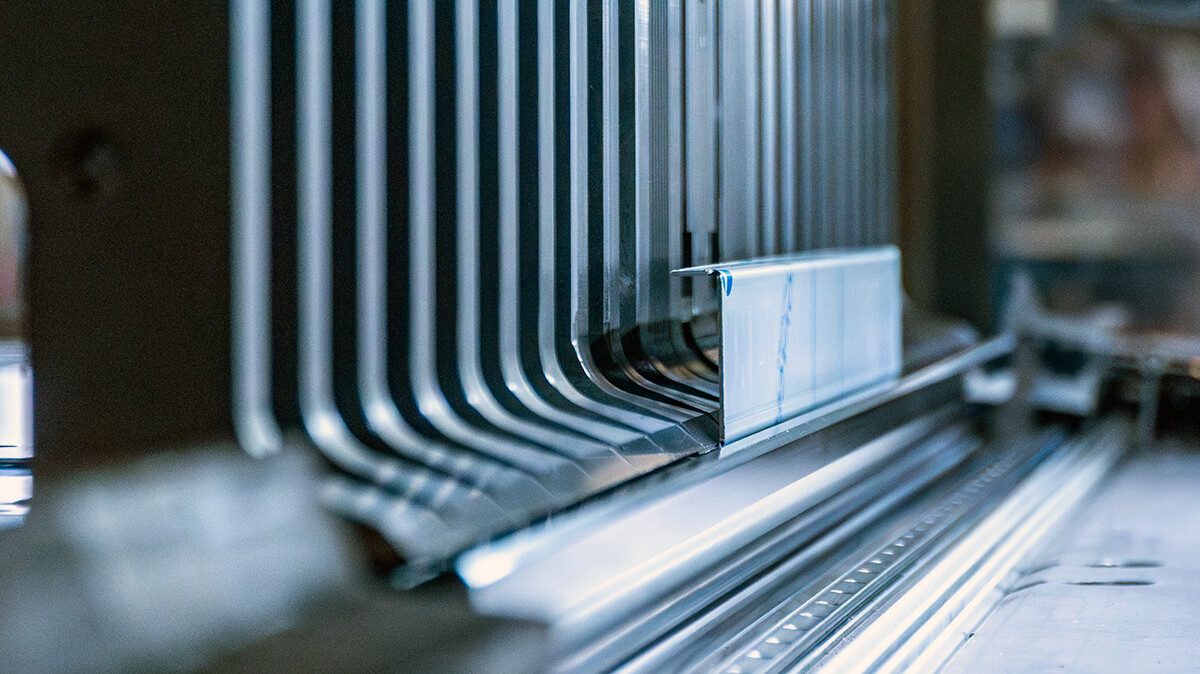
The P2 is a Salvagnini panel bender designed for automatic bending and handling cycles. Its relevance depends on your production context: material and thickness range, part geometry, batch variability, layout and the level of automation you want to explore.
That is why we do not ask for drawings first. We start with the production variables that determine whether a more detailed technical discussion is useful.

When bending becomes difficult to manage, speed is not always the issue
In high-mix sheet metal production, productivity losses often come from setup, changeovers, first-part correction, manual handling, operator dependency and inconsistent repeatability.
The P2 is worth evaluating when these factors make bending harder to plan, stabilize or scale across different part families.
| Materials & thicknesses | Which materials and thickness ranges define your production mix? |
| Part families & geometries | Which recurring shapes, dimensions and bending sequences do you manage? |
| Volumes & variability | Are you producing recurring batches, high mix / low volume parts or customized components? |
| Automation & layout | What level of automation, handling and integration do you need? |
| Production goal | Are you trying to reduce setup, improve repeatability, stabilize quality or support operators? |
| High mix, low volume | Many SKUs, small batches and frequent changes make bending difficult to stabilize. |
| Recurring part families | Similar parts vary by dimensions, geometry or bending sequence. |
| Quality and repeatability | First-part correction, rework or operator-to-operator variability affect consistency. |
| Manual handling reduction | Bending depends heavily on manual movement, repositioning or discontinuous flow. |
| Bending bottlenecks | Cutting or punching capacity is available, but bending limits downstream flow. |
Your preliminary P2 fit check
Answer a few quick questions to help us understand your production scenario. You do not need to upload drawings or prepare technical data, just select the options that best describe your process.
If more technical detail is needed, we can ask for it later.
What happens next
- We review your production context: your answers help us understand your production goal, part type, thickness range, production mode and timeline.
- We identify the most relevant points to evaluate: the review focuses on application fit, not only on machine features.
- We suggest the next best step: if there is a potential fit, a Salvagnini specialist will contact you for a preliminary discussion.
- We clarify practical adoption points: if useful, the discussion can also cover programming approach, operator involvement, layout constraints and support requirements.